Istanbul International Financial center: In 2021, Turkey’s economy was the 19th largest economy in the world by nominal GDP, it is classified as an emerging market economy and has been experiencing growth and modernization in recent years.
In 2021, it has been growing and attracting both domestic and international investors. The demand for real estate in Turkey has been driven by a combination of factors, including economic growth, urbanization, demographic trends, and government incentives.
In recent years, the Turkish government has introduced various policies to stimulate the real estate market and attract foreign investment. These policies include tax incentives for foreign investors, streamlined procedures for obtaining residency permits, and increased access to financing.
Some of the popular cities for real estate investment in Turkey include Istanbul, Ankara, and Izmir, where there is a high demand for residential and commercial properties. The Turkish government has also encouraged the development of new housing projects, including large-scale urban regeneration projects and mixed-use developments.
Istanbul International Financial Center
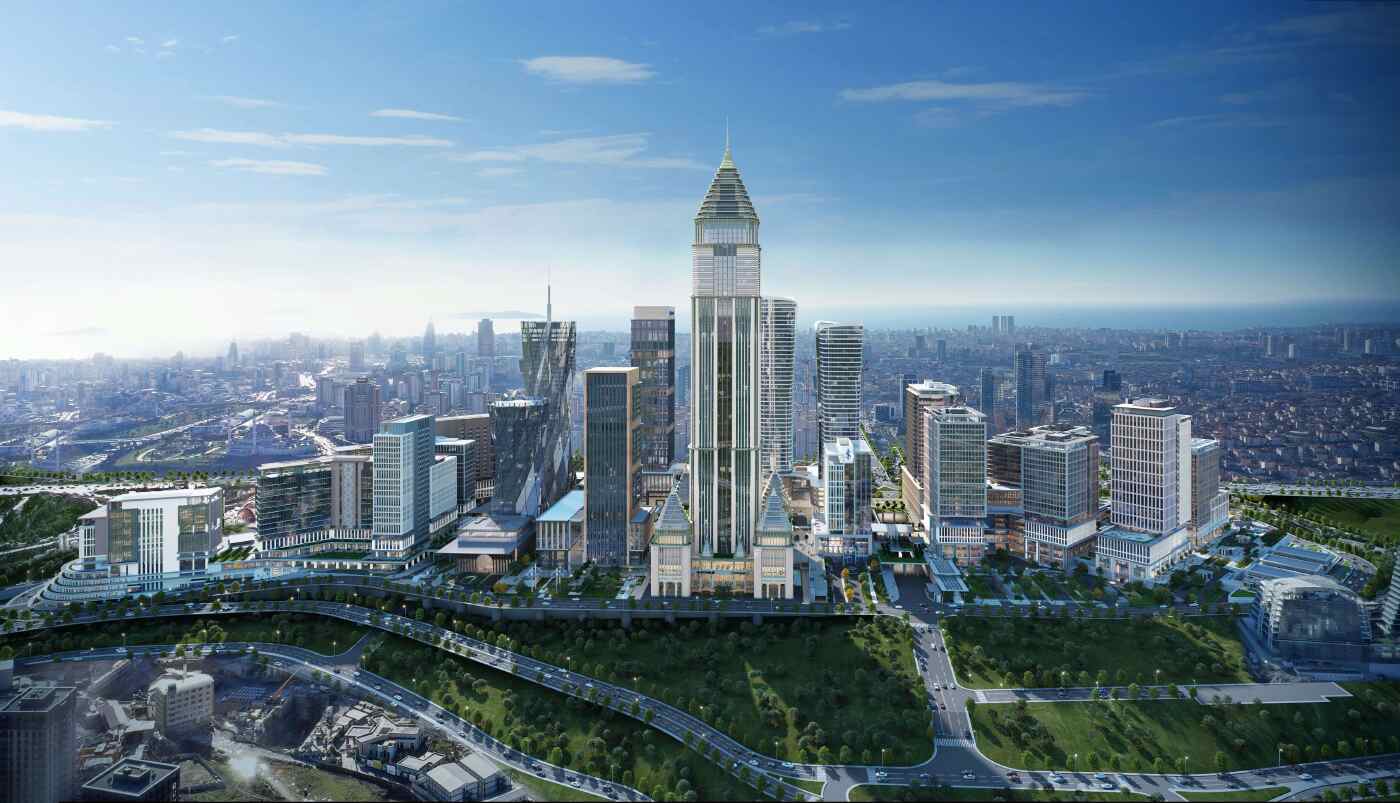
The project is supported by the Turkish government, which has invested in the construction of the necessary infrastructure, including office buildings, hotels, and transportation links. The IIFC is located in Ümraniye district in Istanbul and is being developed on an area of 300.000 m², it has been approved by the TC Ministry of Environment and Urban Development with a 1/5000 Scale Master Plan and 1/1000 Scale Implementation Construction Plan and the first phase of the project was completed in 2018.
The IIFC project was first announced in 2009 as a response to the rapid growth of Turkey’s economy, and it has been developed through various stages since then. The project aims to create a world-class financial district in Istanbul that will attract international investors, multinational corporations, and financial institutions to operate from Turkey.
The IIFC also aims to provide various financial services, including banking, insurance, capital markets, and investment management. It will be equipped with modern infrastructure, including state-of-the-art technology, and offer a range of tax incentives and business-friendly regulations to attract international businesses.
What Will Included?
Istanbul International Financial center is supported by the Turkish government, which has invested in the construction of the necessary infrastructure, including office buildings, hotels, and transportation links. The IIFC is located in Ümraniye district in Istanbul and is being developed on an area of 300.000 m², it has been approved by the TC Ministry of Environment and Urban Development with a 1/5000 Scale Master Plan and 1/1000 Scale Implementation Construction Plan and the first phase of the project was completed in 2018.
The project is built on a smart city stander, it will feature a total of 45 buildings, including office towers, hotels, residential buildings, retail and commercial spaces, cultural centers, and a shopping mall. The first phase of the project included the construction of several office towers, including the 52-story office tower of the Turkish state-run bank Halkbank, Ziraat bankası, Vakıflar bankası, public institutions like SPK and BBDK, and a number of other buildings such as a conference center, a hotel, and residential units.
The project’s next phases will see the construction of additional office and residential buildings, a stock exchange building, an Islamic finance center, and a museum of finance, among other facilities. It is worth noting that the number of buildings may change as the project develops, and the final number may differ from the current estimates.
International Financial Center Benefits:
Investing in the Istanbul financial center can offer a range of benefits, including:
- Access to a large and growing market: Istanbul is Turkey’s largest city and a major economic hub, with a population of over 15 million people. This provides investors with access to a large and growing consumer market, as well as a range of business opportunities.
- Strategic location: The Istanbul Financial Center is located in Istanbul at the crossroads of Europe and Asia, making it a gateway to both regions. This provides investors with access to a range of markets, including Europe, the Middle East, and Central Asia.
- Strong economic growth: Turkey has been experiencing strong economic growth in recent years, and Istanbul is a major contributor to this growth. The city’s economy is diverse, with a range of industries, including finance, manufacturing, and services.
- Competitive business environment: Istanbul offers a competitive business environment, with a relatively low cost of living and doing business, compared to other major financial centers. There is also a large pool of skilled workers, particularly in fields such as finance, technology, and engineering.
- Government support: The Turkish government has been actively promoting Istanbul as a financial center, and has implemented a range of measures to support this goal. These include tax incentives, simplified business registration procedures, and infrastructure investments.
- Growing financial sector: Istanbul’s financial sector is rapidly expanding, with a range of financial institutions, including banks, investment firms, and insurance companies. The city is also home to the Istanbul Stock Exchange (Borsa Istanbul), which has become an increasingly important player in the global financial markets.
- Access to talent: Istanbul is home to a range of universities and research institutions, which provide access to a talented workforce with expertise in a range of fields.
Overall, the IIFC is expected to play a significant role in Turkey’s economic growth, by increasing the country’s access to international capital and facilitating the growth of the country’s financial sector. It will also contribute to the development of Istanbul as a global city, helping to attract new businesses, investment, and talent to the region.